
Are you looking forward to going back to the office? For some of us it’s been over a year since we walked across those hideous, blue carpet tiles, sat under harsh fluorescent lights and made mediocre coffee in the communal kitchen.
Working from home may have been challenging but it did provide some unexpected comforts and convenience. It’s now pretty normal to shower in your morning break right? We can sort the washing whilst on a Zoom call, workout in our lunch break and we never have to miss a delivery again.
So if you are one of the many people making WFH a more permanent part of your life, then you need to get your work space sorted. During lockdown one and two the focus was survival. No one had time to plan and decorate an office, certainly not if you had kids. And the smug bastards who did have time bought up the world’s entire supply of desks anyway. But now could be the perfect time to make your workspace a priority.

House by John Lewis, Oxford Modular Storage.
So here are my top tips for designing a home office.
1. Pick the best spot in your home
Your work space doesn’t always have to be a dedicated room. It can literally be a ‘space’ within your home. And if you are going to be in it all day then pick a space that will inspire you. Maybe somewhere with a nice view, somewhere with lots of natural light, or a room that makes you feel calm or happy. Of course it depends on the nature of your work. If you are laptop based then its easy to move around the home to make the most of the light at different times of day. You can then have just a storage station where you pack away your work at the end of each day.
For those of you more restricted to a desk and desktop computer then this is more tricky. But if you can try if you can, try to integrate your workspace into one of the best rooms of the house, like an open plan living space or a sunny dining room. But if there is just no choice and you are relegated to the tiny spare bedroom then really claim it as your own to make it as inspiring as possible. Your work space is much more important than the space for air drying the laundry or storing old gym equipment that rerely gets used.
2. Get a decent chair
This is a must if you are working in one spot all day. Dining chairs, armchairs and sofas just aren’t going to do the job if you’re sat in it for ten hours a day. But don’t worry not all office chairs are as ugly as you might think. There are some much more attractive options out there now so it doesn’t have to be black and ugly.
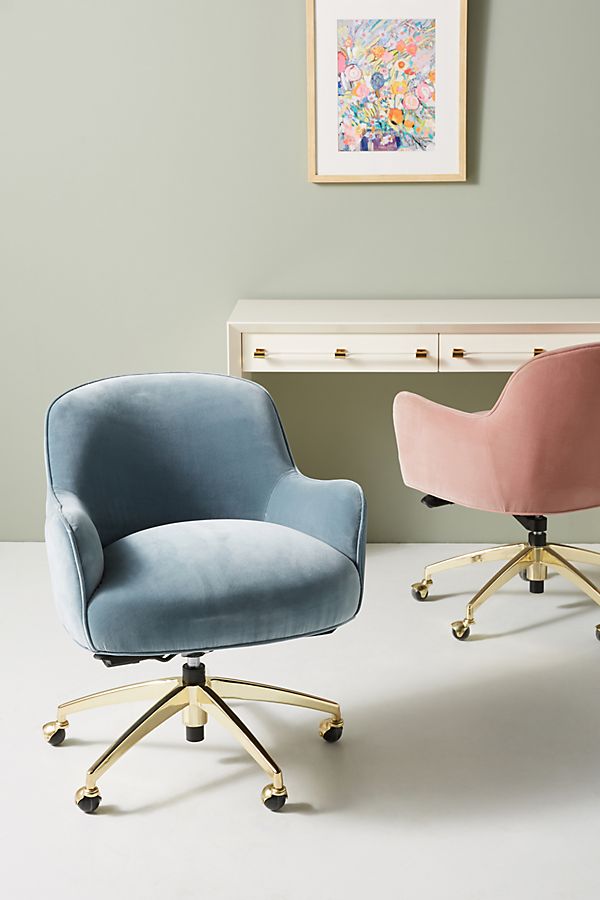
The gorgeous Camilla chair from Anthropologie
3. Think about colour
Colour is going to have a big impact on your space so it’s important you choose something that works for you. Blues are calming and soothing so perfect if you find your job stressful, but not so great if you want to feel stimulated and energised. Green is great for concentration but some can find it a bit oppressive. Oranges and reds are stimulating so great for creating energy but not ideal if you feel anxious or stressed at work. When considering colour it’s also worth thinking about the size of the room the amount of natural light it gets. If you need more help choosing the perfect paint colour you can read this blog here.
4. Lighting is key
The worst lighting you could work under is a single bulb hanging from a sad, single pendant in the middle of the ceiling. Sadly this is a common scenario for all of us. Developers of the past have not blessed us with well planned lighting. But good lighting is key for any room to feel good and function well. The best scenario is a mixture of ceiling lights, wall lights, lamps and a task light on your desk. Layered lighting like this creates atmosphere and ambience. If changing the hardwiring is out of the question then light up corners with floor lamps and make sure you have a decent angle lamp on your desk.
5. Think Storage
Before you can plan your storage you need to make a list of everything you need to store. Create a detailed inventory of everything you use from printer, paper and ink, to paperwork, folders and pencils. This will determine what type of storage you need. For some its’ as simple as a drawer to put a notebook, pen and laptop charger in at the end of each day. Others may need filing cabinets, cupboards and shelves. Carefully analyse what you have and then workout what type of storage will accommodate everything you have. If you need a lot of storage maximise space by using the height of your walls for cupboards of shelves. And if you can afford to go bespoke you have the utilise every inch by making shelves that are the perfect height for your folders or the perfect depth for your printer.
6. Clear away clutter
Most of us know that a clear workspace helps clear the mind. That’s why you really don’t want to be sharing your office with drying laundry. If you are designing a dedicated home office then keep things clutter free by getting your storage right and creating a space for everything. And if you are setting up office in the living room or the kitchen then give yourself time each morning to load the dishwasher or tidy up so you can start the day with a mess free space.
7. Personalise the space
But clearing away clutter doesn’t mean you should have a bland space. You should definitely dress your space with decorative items that create a focal point and reflect your personality. Open shelves are great for art work and plants. Organise paperwork with memo boards and choose stylish and coordinating accessories to add colour and personality to your desk space.
This design is for a client in Poole, she wanted to create a pretty focal point with her desk and keep all the ugly paperwork and stationery hidden away.
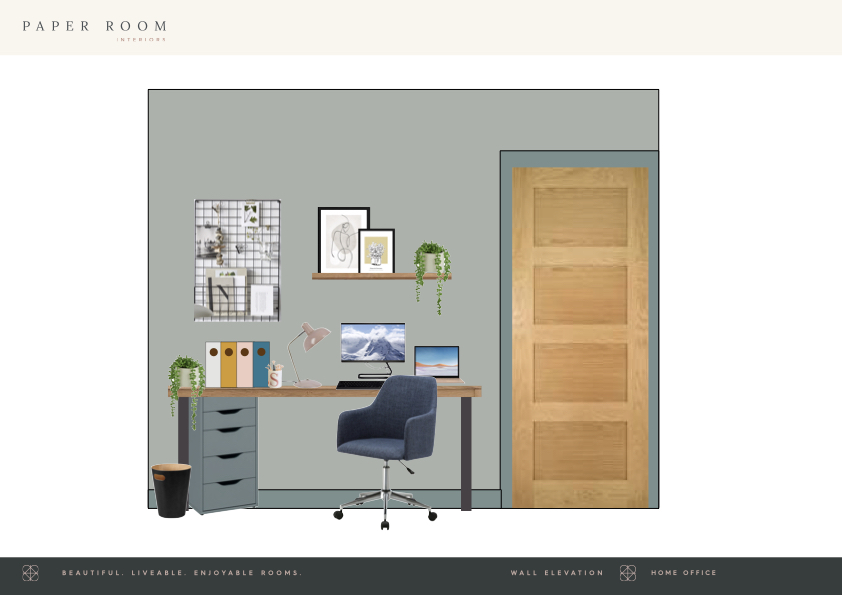
If you would like help designing your home office then give me a shout. I offer my interior design services across Southampton and Hampshire.
Sarah x


